
Remember all the doom-and-gloom predictions? After the NAR settlement shook up how buyer's agent compensation gets handled, practically every real est...
Remember all the doom-and-gloom predictions? After the NAR settlement shook up how buyer's agent compensation gets handled, practically every real estate headline was screaming that commissions were about to hit the floor. Agents were nervous. Brokers were holding emergency office meetings. And honestly, a lot of people started quietly updating their LinkedIn profiles just in case.
Then the actual 2026 data came out, and it told a completely different story — at least in Missouri.
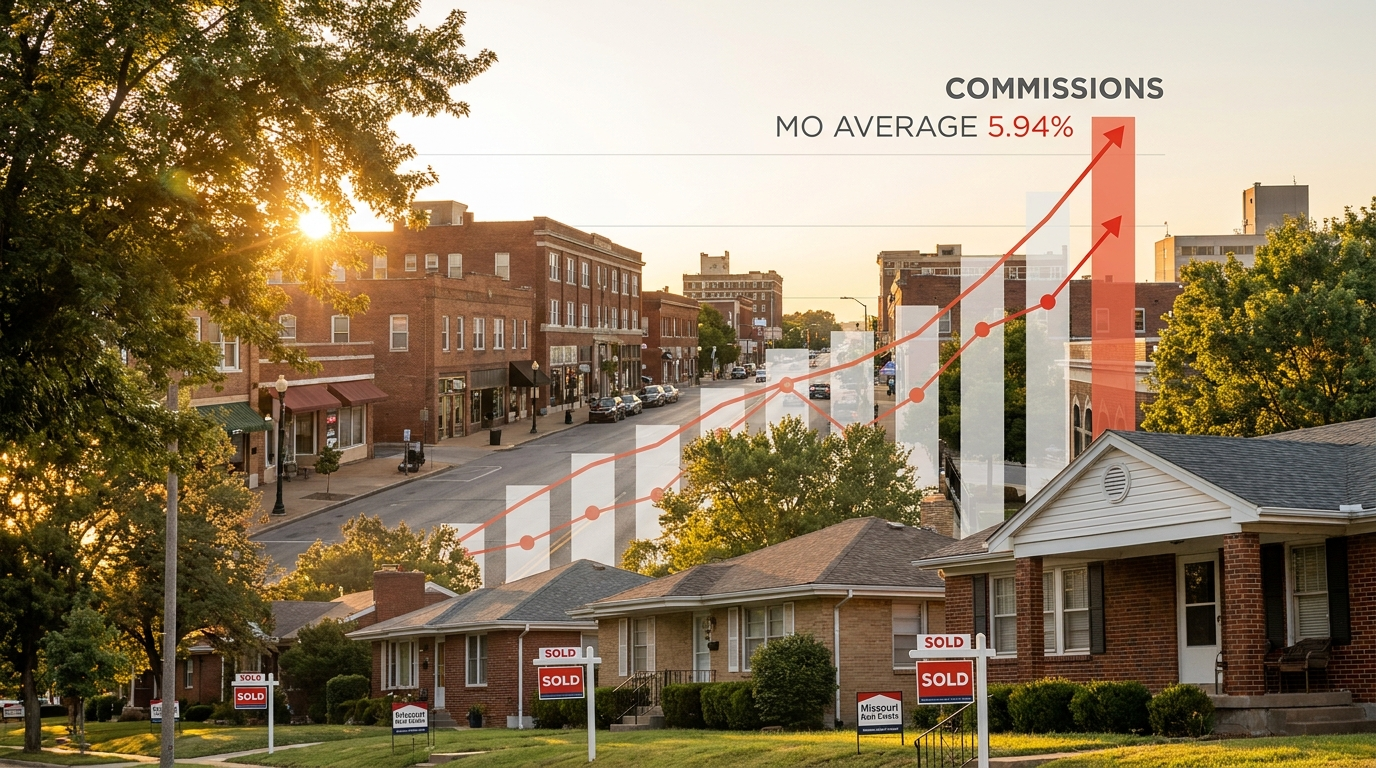
According to the latest Clever Real Estate commission survey, the national average commission sits at roughly 5.70%. That's not the collapse anyone predicted. But what really caught my attention was Missouri specifically: agents here are averaging 5.94%, putting the state among the highest commission markets in the entire country. Michigan and Tennessee are up there too. All affordable markets. All doing better than the national average.
So what's actually going on?
Affordable Markets Have a Built-In Commission Cushion
Here's the thing that most of the national commentators missed when they were making their doomsday predictions. They were looking at the country through a coastal lens. When you're selling a $1.4 million bungalow in San Francisco, there's enormous pressure to negotiate commissions down because the dollar amounts are so staggering. A 1% reduction on a $1.4M sale is fourteen thousand dollars — buyers and sellers notice that.
But in Springfield, Missouri? In Kansas City's suburbs? In the mid-range neighborhoods where most Missouri transactions actually happen? The math is completely different. When a home sells for $240,000, even a full 6% commission is $14,400 split between two agents and their brokerages. There's simply less room — and less psychological urgency — for sellers to push back hard on commission.
That's not the only factor though. Affordable markets also tend to have tighter-knit real estate communities. Agents know each other. Referrals matter. Relationships matter. The transactional, anonymous pressure to discount that you see in big coastal markets just doesn't hit the same way in markets where your reputation is built over years of community connections.
What the 2026 Commission Data Actually Means
The Clever survey paints a picture that should genuinely encourage agents in states like Missouri, Michigan and Tennessee. While coastal markets have seen more commission compression, affordable interior markets are holding steady or even pushing slightly higher as agents demonstrate value more explicitly — something the post-settlement environment actually required.
In a weird way, the settlement forced a good habit. Buyers agent agreements, more transparent conversations about compensation, agents actually articulating what they do — all of that has helped agents in markets where buyers already trust and rely on local expertise. Missouri buyers aren't scrolling Zillow and thinking they can do this themselves. They want a local agent who knows the neighborhoods, knows the inspectors, knows which zip codes are appreciating and which ones aren't.
The result? Commission stayed strong. And for agents working in these markets right now, that's genuinely good news worth paying attention to.
The Local Angle Makes This Even More Interesting
I should mention — Pay Per Closing is headquartered right here in Springfield, Missouri. So this data hits a little close to home (pun absolutely intended). Watching Missouri come out of the post-settlement noise as one of the stronger commission markets in the country is validating. It confirms what we've always believed about this market: relationships, local expertise and consistent lead flow matter more here than slick marketing tricks.
Springfield agents, Kansas City agents, St. Louis agents — the agents grinding in Missouri markets right now are doing it in conditions that are actually favorable compared to what a lot of their counterparts in other states are dealing with. That's a real advantage and it compounds over time when you have a steady pipeline of referrals coming in.
Healthy Commissions Change the Math on Referral Fees
This is where things get really practical. One of the biggest complaints agents have about referral services is the fee structure. Some of the big national platforms are charging 30%, 35%, even higher referral fees off the top of your commission. When commissions were expected to drop, those fees started to look increasingly painful.
But here's the flip side: when commissions are healthy — and in Missouri they clearly are — the math on a well-structured referral fee becomes much more favorable. You're working with a bigger number. A low referral fee on a solid commission is just good business. It's basically the entire argument for the pay-per-closing model.
Think about it this way. If you're averaging 5.94% on Missouri transactions and you're paying a low referral fee only when deals actually close, you're keeping more of your commission than agents in markets that are both seeing compression AND paying high upfront lead costs. That combination — strong local commissions plus a pay-at-closing referral structure — is genuinely one of the better positions an agent can be in right now.
The Problem Most Agents Are Still Sitting With
Commissions being healthy doesn't solve the lead flow problem though. I talk to agents all the time who are great at closing, great at relationships, great at actually doing the job — but their pipeline is a mess. Some months are feast, some months are famine and they never quite know which one is coming.
That's the piece that commission data doesn't fix on its own. You can have a 5.94% average commission and still have a rough year if you're only closing a handful of transactions because you couldn't keep consistent referrals coming in. The two problems are separate. Healthy commissions are the good news. Inconsistent lead flow is the persistent headache that doesn't go away on its own.
This is exactly where Pay Per Closing comes in. The model is built around getting agents consistent real estate referrals every month — exclusive leads, not shared with a dozen other agents — with a CRM to manage everything and AI tools to help nurture leads that aren't quite ready to move yet. No required monthly fees. You pay at closing, which in healthy commission markets like Missouri means the numbers work in your favor.
There are also tools built in for self-directed marketing campaigns like retargeting, plus brand-building resources for agents who want to grow beyond just referrals. It's designed for agents who are serious about building something sustainable, not just chasing one-off transactions.
What Missouri Agents Should Take Away From This
The 2026 commission data is genuinely encouraging if you're working in Missouri or any of the other affordable, relationship-driven markets that came out ahead. You're in a good position. Commissions are holding. Buyers still trust local agents. The doom didn't materialize the way people feared.
The move now is to capitalize on that favorable environment with a consistent referral pipeline that doesn't dry up between transactions. If you're ready to see whether your territory is available, hit the Check Your Territory button at the top of the page and find out what's open in your market.
The commission conditions are right. The model makes sense. The only question is whether you're going to take advantage of it.