A few years ago I had a conversation with a top-producing agent in Phoenix who told me something that stuck with me. She said, "I don't have a lead pr...
A few years ago I had a conversation with a top-producing agent in Phoenix who told me something that stuck with me. She said, "I don't have a lead problem. I have a speed problem." At the time I thought that was a little dramatic. Now I think she was ahead of her time.
The data on this has been piling up for years and by 2026 it's basically undeniable. Leads contacted within the first five minutes convert at dramatically higher rates than leads contacted even 30 minutes later. One study from Harvard Business Review put the odds of qualifying a lead at 21 times higher if you call within five minutes versus 30 minutes. Twenty-one times. And yet most agents are still calling back the next morning like it's 2009.
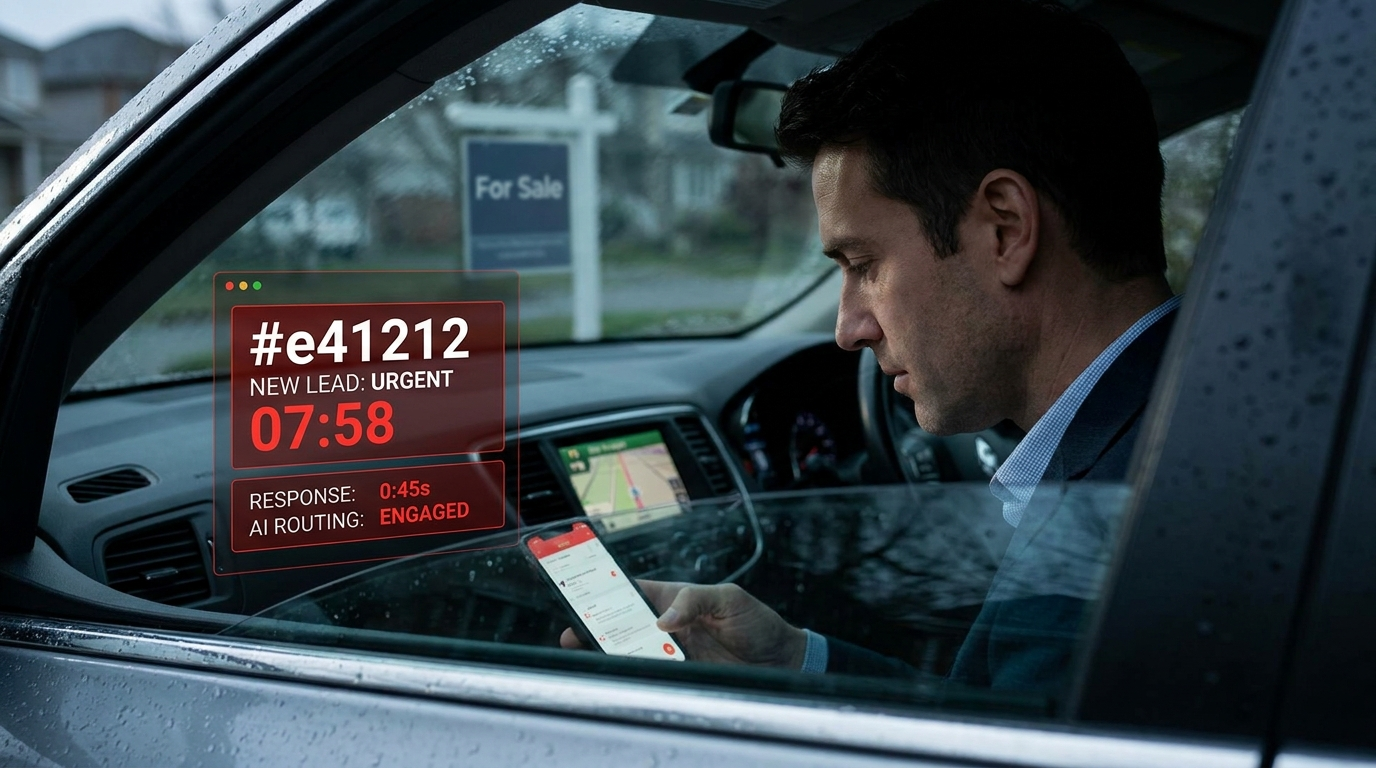
The "8-minute rule" as I've started calling it is simple: if you can't reach out to a lead in under eight minutes, you're giving that lead to someone else. That's just the reality of how consumers behave in 2026. They fill out a form, they expect contact fast, and if they don't get it from you they move on to the next agent suggestion on whatever platform they used.
Why This Matters Even More When You're Paying for Leads
Here's where this gets really personal for most agents. If you're investing in paid referral leads — which is the smart move for building a consistent pipeline — and you're letting those leads go cold because you didn't respond fast enough, you're essentially lighting money on fire. I've watched agents blame their referral service for "bad leads" when the real issue was a 6-hour response time.
When you get a referral lead, that person raised their hand. They expressed interest. They were warm when they came in. Every minute that passes after that, they get a little colder. By the next morning they've talked to two other agents and probably don't even remember filling out your form.
The 62% Problem — And What to Do About It
Here's the operational challenge that makes this so hard. Research consistently shows that roughly 62% of real estate leads come in outside of business hours. Think about that. The majority of your leads are arriving when you're at dinner, at your kid's game, asleep or showing a home to someone else.
So the question isn't just "how fast can you respond?" The question is "how do you build a system that responds fast when you physically can't?"
In 2026 the answer to that question has gotten a lot more accessible and a lot more affordable. Let me walk you through what an actual operational playbook looks like for a solo agent.
Step 1: AI Voice Qualification (This Is Now Affordable)
AI voice qualification used to be something only big teams or tech-forward brokerages could afford. That changed. By 2026 the cost has dropped to literal cents per minute. What that means in practice is you can have an AI voice agent pick up an inbound call or place an outbound call to a new lead within seconds of them submitting a form.
These AI voice systems have gotten genuinely good. They can introduce themselves as your assistant, ask basic qualifying questions (timeline, budget, pre-approval status, property preferences), and capture that information in your CRM before you ever touch the lead. The lead feels contacted quickly. You get qualified data before your callback. Everyone wins.
Is it perfect? No. Some leads will hang up when they realize it's AI. But many won't, especially if the AI is natural-sounding and upfront about being a virtual assistant. And the ones who do engage are handing you incredibly useful information.
Step 2: Ring-Tree Routing for Your Team (Even If Your Team Is Small)
If you have any kind of support structure — a buyer's agent, a transaction coordinator who also handles initial calls, a spouse who helps part-time — you can set up ring-tree routing. This is where an inbound call rings multiple people simultaneously or in sequence, so the first available person picks up.
Tools that handle this are not expensive. Many CRMs built for real estate include this functionality or integrate with services that do. The goal is simple: a human or qualified AI picks up within the first minute whenever possible.
Step 3: Automated Text + Email Sequence Fires Immediately
Even while your AI voice qualifier or ring-tree routing is doing its thing, your CRM should be firing an immediate text and email to the lead. Something personal-sounding but automated. Something like: "Hey [Name], I just got your info and I'm stepping out of a showing — I'll call you in the next few minutes. In the meantime, is there a specific area or price range I can look into for you?"
That text buys you time. It tells the lead they're not being ignored. It creates a two-way conversation before you've even picked up the phone. Platforms that offer serious automation — including AI that nurtures the lead through this early phase — are worth every penny for exactly this reason.
Step 4: Your Personal Callback Happens Within 8 Minutes
After all of this has fired, your job as the agent is to make your personal callback happen as fast as possible. Not tomorrow. Not after your showing. Ideally within 8 minutes of the lead coming in.
I know that sounds unrealistic for a solo agent but think about it operationally. If your AI has already qualified the lead and your automated text has already created engagement, your callback is warmer, faster and more informed. You're not starting from scratch. You're finishing a handoff.
Step 5: After-Hours Gets a Protocol
For leads that come in between 9pm and 7am, your system should be smart enough to do the following: AI voice or text engages immediately, qualifies where possible and schedules a specific callback time for the morning. Not "I'll call you soon" — an actual scheduled time. "I'll give you a call at 8:15am" is infinitely better than "I'll be in touch."
When you call at exactly 8:15am, you've already demonstrated reliability before the relationship even starts.
This Only Works If Your Lead Flow Is Consistent
Here's the thing about building all of this infrastructure — it only pays off if you have a steady stream of leads coming in. The worst version of this story is an agent who builds a beautiful speed-to-lead system and then has 3 leads in a month to run through it.
That's why the lead source matters as much as the speed system. And this is exactly why I'd point any agent toward Pay Per Closing. The model is built around giving agents real estate referrals every month — exclusive leads in your territory with low referral fees and no required monthly fees eating into your margins. You're not competing with 12 other agents for the same lead. You get the tools to work that lead including CRM, AI nurturing and retargeting capabilities. The leads are yours to run through the exact playbook I just described.
If you're building a speed-to-lead system but relying on inconsistent lead sources, you're optimizing a leaky bucket. Getting a predictable flow of pay per closing real estate leads means your infrastructure actually gets used consistently enough to generate real results.
The Bottom Line
Speed-to-lead in 2026 isn't just about picking up the phone faster. It's about building a system that responds immediately regardless of when a lead comes in or what you're doing at that moment. AI voice qualification, ring-tree routing, automated texts and a disciplined personal callback protocol are all pieces of the same machine.
But none of it matters without leads worth responding to. If you want to see whether your market is available and start getting consistent referrals routed to that system you just built, go to Pay Per Closing and hit that Check Your Territory button. Because the best speed-to-lead setup in the world only wins if you have the lead in the first place.