It's been nearly two years since the NAR settlement changed how buyer representation works, and I still talk to agents every week who dread the moment...
It's been nearly two years since the NAR settlement changed how buyer representation works, and I still talk to agents every week who dread the moment a buyer asks "why do I have to sign something just to look at a house?" They stumble, they over-explain, they apologize — and sometimes they just skip the agreement altogether hoping nobody notices. That's a problem because the written buyer agreement requirement isn't going away.
The April 2026 Tuccori settlement reaffirmed what's been in effect since August 2024: buyers must sign a written agreement before you tour a property with them. Period. And even with the Eighth Circuit appeal expected to produce a ruling sometime in late summer or fall of 2026, legal experts are pretty clear that the practice change sticks regardless of how that ruling lands. So rather than waiting for the legal dust to settle, the smarter move is learning how to have the conversation confidently — because agents who lock in their buyers early get paid more consistently than the ones who wing it.
Why the Conversation Feels Awkward
The awkwardness usually comes from one thing: agents treating the buyer agreement like it's something they need to apologize for. I get it. You don't want to scare off a new lead before you've even built rapport. But think about how that energy reads to a buyer. If you're nervous about handing them a document, they're going to be nervous about signing it.
The reframe that changed everything for me was simple. Doctors don't apologize for having you fill out intake paperwork. Attorneys don't apologize for retainer agreements. The buyer agreement is your version of that. It's not a trap, it's professionalism. Once you genuinely internalize that, the whole conversation shifts.
The Script That Actually Works
Here's a version I've seen work really well in practice. You can adapt the language to fit your personality but keep the structure because the structure is what matters.
Before the first tour:
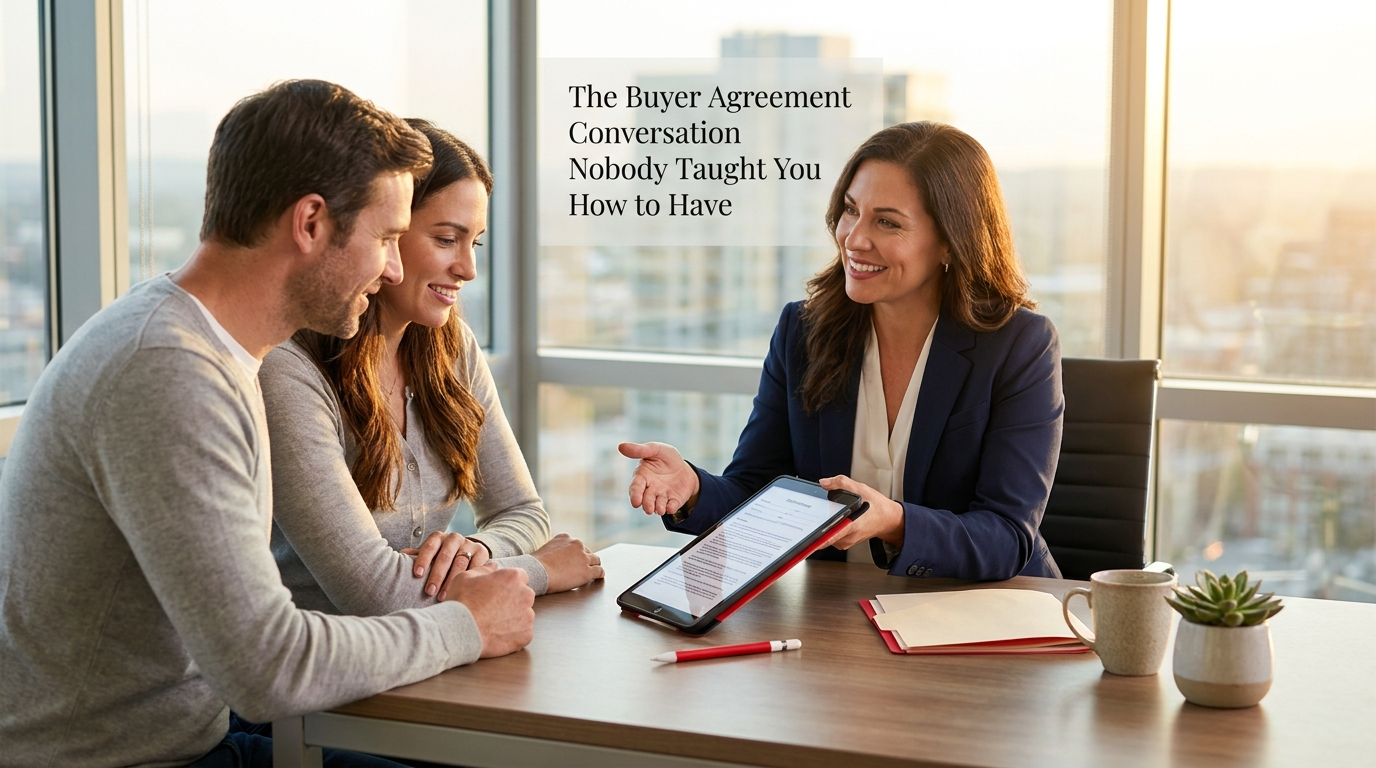
"Before we head out, I want to walk you through something really quickly. In my business I work under a written buyer agreement — it's actually required now and honestly I prefer it that way. What it does is spell out exactly how I get compensated, what you can expect from me and what I'm committing to you. It protects both of us. It takes about five minutes to review, do you have a second to go over it before we look at the first place?"
Notice what that script does. It acknowledges the requirement without making it sound like a punishment. It positions compensation transparency as a positive. And it ends with a soft close that makes saying yes feel easy.
Handling the Big Objection
The most common pushback you'll get is some version of: "Why do I have to sign this? I'm not even sure I want to use you yet."
Here's how to handle it without getting defensive:
"That's totally fair and I hear that a lot. Here's the thing — I'm not asking you to commit to buying a house with me or to anything long term right now. What this agreement does is make sure that if I find you the right home and we close, I'm compensated for the time and expertise I put in. Think of it like hiring a contractor — they give you a written estimate before they start, not after the job is done. This is the same idea. If at any point this isn't working for you, let's talk about it. I'd rather have that conversation than have you feel stuck."
That answer does three things: it validates their concern, it explains the purpose in plain terms and it removes the feeling of being trapped. Most buyers who push back aren't actually opposed to signing, they're just surprised and need a second to process it.
What to Do When They Still Say No
Sometimes a buyer will still resist. At that point you have a decision to make — and the decision is easier than you think. You can't legally tour with them without the agreement. More importantly you shouldn't want to. An unsigned buyer is a buyer who hasn't committed to working with you, and in my experience those buyers are the ones who end up buying through whoever is standing in front of them at an open house.
Your time and expertise have real value. If someone isn't willing to acknowledge that with a signature, they aren't the right client for you right now. Let them know the door is open when they're ready and move on. The agents who protect their time are the agents who build sustainable businesses.
Tips for Making the Agreement Less Scary on Paper
A few practical things that help buyers feel more comfortable:
- Use a shorter term agreement to start. Instead of a six-month agreement, offer a thirty or sixty day agreement for a specific search area. It feels less permanent and gives buyers a comfort window.
- Walk through every line. Don't just hand them a document. Read it with them. When they see you're not hiding anything, resistance drops significantly.
- Highlight what they get. Your agreement should outline your obligations too — communication timelines, what searches you'll run, how you'll handle negotiations. Make sure they see that this protects them as much as it protects you.
- Have it ready digitally. The easier you make it to sign, the less the paperwork becomes a moment of friction.
The Bigger Picture: Getting Paid Requires Getting Leads First
Here's the part that a lot of agents overlook. All of this only matters if you have buyers to have the conversation with in the first place. The agents who are winning right now aren't just good at the buyer agreement conversation — they have a consistent pipeline of leads coming in every month so they can afford to let a difficult buyer walk.
That's exactly the problem that Pay Per Closing was built to solve. Inconsistent lead flow is one of the biggest killers of real estate careers. You have a good month, you close a few deals, then you realize you stopped prospecting and now the pipeline is empty. It's a cycle that is genuinely exhausting and it makes every single lead feel like your last one — which is exactly the energy that makes the buyer agreement conversation harder.
When you have real estate referrals coming in on a consistent monthly basis, you can approach every buyer interaction from a position of confidence rather than desperation. Pay Per Closing delivers exclusive leads directly to agents, with low referral fees you pay only at closing — no required monthly fees eating into your income before you've made a dime. There's also a built-in CRM, AI-powered lead nurturing and tools to help you run your own retargeting campaigns and build your brand over time.
The agents who convert the most leads aren't necessarily the best salespeople — they're the ones who have enough volume coming in that they can focus on quality conversations instead of chasing every warm body.
If you want to stop worrying about where your next client is coming from and start focusing on having better conversations with the ones you have, go check your territory at Pay Per Closing. Hit the Check Your Territory button and see what's available in your market. The buyer agreement conversation is a lot easier when you've got five more lined up behind it.